Rolex vs Omega

Rolex vs Omega: Complete Watch Comparison Guide

Rolex and Omega are two of the most recognizable luxury watch brands in the world. Both have a long history, strong brand recognition, and a loyal following among watch enthusiasts. The comparison of Rolex watch vs Omega is especially common because the two brands compete in many of the same categories.

Rolex has the Submariner, Sea‑Dweller, Daytona, Datejust, GMT‑Master II, and Sky‑Dweller, while Omega offers the Seamaster, Planet Ocean, Speedmaster, Aqua Terra, and Worldtimer. Some of their most iconic watches are direct competitors, including the Rolex Submariner vs Omega Seamaster Diver 300M and the Rolex Daytona vs Omega Speedmaster.

So, when it comes to Omega versus Rolex, which brand is better? There is no single answer. Rolex generally focuses on precision, durability, consistency, and iconic luxury design, while Omega places greater emphasis on movement innovation, anti‑magnetic technology, and technical versatility.

In this guide, we will compare Rolex and Omega from design, materials, accuracy, reliability, movement technology, water resistance, finishing, price, resale value, and watch straps.

Rolex vs Omega: Brand History and Positioning

rolex vs omega

Rolex and Omega both have more than a century of watchmaking history, but their brand identities have developed in somewhat different directions.
Rolex has become one of the strongest names in luxury watches. Models such as the Submariner, Daytona, GMT-Master II, Datejust, and Oyster Perpetual are instantly recognizable.
The brand is particularly associated with:

  • Luxury and prestige
    Professional sports watches
  • Durability
    Precision
  • Iconic case and bracelet designs
  • Strong secondary-market demand
  • Omega has a different but equally important position in Swiss watchmaking.

The brand is particularly famous for the Speedmaster’s connection with space exploration and the Seamaster’s history of professional diving and water-resistant watches. Omega has also invested heavily in modern movement technology, particularly its Co-Axial escapement and Master Chronometer certification.
Omega is often associated with:

  • Technical innovation
  • Anti-magnetic technology
  • Professional watches
  • Space exploration
  • Diving
  • Chronographs
  • Modern movement engineering

Therefore, even before comparing individual watches, the difference in brand philosophy is already noticeable

Rolex vs Omega: Design and Appearance

When buyers compare Rolex and Omega watches, design is usually the first element that catches their attention. Although both brands feature instantly recognizable design languages, their take on luxury sports watches differs significantly. Rolex follows a timeless, conservative design philosophy that stays consistent across generations. Key brand signatures include the iconic Oyster case, Mercedes hands, Cerachrom ceramic bezel, as well as the classic Oyster and Jubilee bracelets.

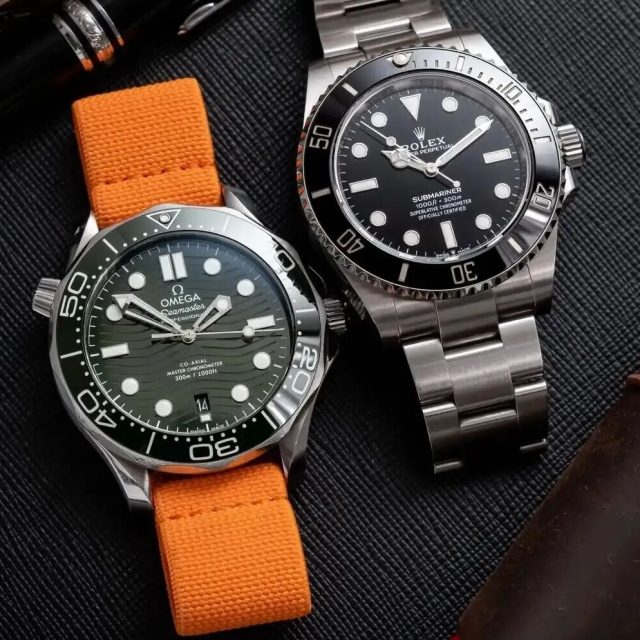
In contrast, Omega adopts a more experimental approach. It continuously innovates with case geometry, dial layouts, color schemes, ceramic finishes, surface textures, and movement structures. For instance, the Omega Seamaster Diver 300M stands out with its unique wave‑pattern dial and skeletonized hands. On the contrary, the Rolex Submariner delivers a much cleaner, minimalist, and restrained look.

Neither style is inherently superior. Watch lovers who prefer timeless, decade‑proven aesthetics will naturally lean toward Rolex. Meanwhile, those who favor modern, technical, and contemporary styling often favor Omega. This clear visual contrast explains why the Omega Seamaster and Rolex Submariner are so frequently compared. While both are legendary dive watches with strong identities, they offer completely different visual and styling experiences.

Rolex vs Omega: Materials and Build Quality

Both Rolex and Omega use high-quality materials across their collections, but their material strategies are somewhat different.
Rolex is well known for its Oystersteel, an alloy from the 904L steel family. The brand emphasizes its resistance to corrosion and its ability to maintain a high-quality finish.
Rolex also uses materials such as:

  • Oystersteel
  • 18 ct gold
  • Everose Gold
  • Cerachrom ceramic
  • Sapphire crystal

Omega also uses stainless steel, ceramic, titanium, gold alloys, and other advanced materials throughout its collections.
Some of its notable materials include:

  • Stainless steel
  • Grade 2 titanium
  • Sedna™ Gold
  • Ceramic
  • Sapphire crystal

The important point is that 904L steel is not automatically “better” than 316L steel in every practical situation.
For everyday watch wear, both Rolex and Omega use materials that are highly resistant to corrosion and suitable for long-term use.
The bigger difference is the overall engineering, finishing, case construction, bracelet quality, and brand-specific material technology.

Rolex vs Omega: Accuracy

Accuracy is another major consideration when comparing a Rolex watch vs Omega.
Modern Rolex watches are certified as Superlative Chronometers. Rolex states that its finished watches are tested to a precision of approximately −2/+2 seconds per day.
Omega takes a different approach with its Master Chronometer certification. Certified movements undergo testing through the Swiss Federal Institute of Metrology (METAS), with a stated precision target of 0/+5 seconds per day for the tested watches.
If we compare only the published daily accuracy figures, Rolex has the tighter stated tolerance.
However, accuracy is only one part of mechanical watch performance.
Omega’s Master Chronometer system places considerable emphasis on resistance to magnetic fields, which has become increasingly important in modern everyday environments.
Therefore, it would be misleading to say that Rolex is simply “better” because of the accuracy number.

Rolex vs Omega: Reliability and Durability

For many buyers, reliability is more important than decoration or complicated functions.
Both brands have built their reputations around producing watches that can be worn regularly.
Rolex uses technologies such as the Paraflex shock absorber and Parachrom hairspring in its modern movements. The company places considerable emphasis on durability, precision, and long-term consistency.
Omega also focuses heavily on durability, while adding significant anti-magnetic protection to many of its modern movements.
For everyday use, both brands offer excellent mechanical watches.
The difference is more about their priorities.
Rolex emphasizes:

  • Robust construction
  • Consistent accuracy
  • Shock resistance
  • Long-term reliability
  • Practicality

Rolex vs Omega Reliability and Durability-Rolex

Omega emphasizes:

  • Movement technology
  • Anti-magnetism
  • Precision
  • Shock resistance
  • Technical versatility

Rolex vs Omega Reliability and Durability-Omega

Rolex vs Omega: Iconic Model Comparison

Rolex Submariner vs Omega Seamaster Diver 300M

Rolex Submariner vs Omega Seamaster Diver 300M

Rolex Daytona vs Omega Speedmaster

Rolex Daytona vs Omega Speedmaster

Omega Seamaster Aqua Terra Worldtimer VS Rolex Sky‑Dweller

Omega Seamaster Planet Ocean 600M VS Rolex Submariner Date

Omega Seamaster Planet Ocean 600M VS Rolex Submariner Date

Rolex Submariner Date VS Omega Seamaster Diver 300M

Rolex Submariner Date VS Omega Seamaster Diver 300M

Omega Speedmaster 50th Anniversary Moonwatch

Omega Speedmaster 50th Anniversary Moonwatch

Rolex vs Omega: Bracelet and Strap Options

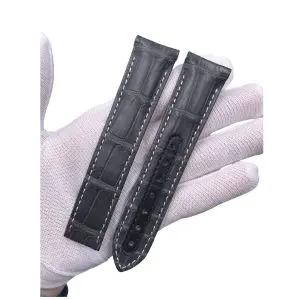
The bracelet is an important part of the overall wearing experience, but changing the strap can completely change the character of a watch.
Both Rolex and Omega offer iconic bracelet designs, but replacement straps give owners another way to personalize their watches.

Classic Strap Designs for Omega

Explore our Replacement Watch Parts for Omega to find strap options by Omega collection and model.

Classic Strap Designs for Rolex

Explore our Replacement Straps Guide for Rolex to find compatible strap options for different Rolex models

Rather than asking whether Rolex or Omega is universally better, the more useful question is:
Which watch better fits your lifestyle, budget, and personal taste?

Which is better Rolex or Omega?

There is no absolute “better” between Rolex and Omega. Both are legendary Swiss watch brands, yet each has its own strengths.
The two brands diverge on technical capabilities, material engineering and colour finishing.
This creates tangible benefits for watch shoppers. If popular Rolex pieces are hard to source, Omega provides viable substitute options that are far easier to acquire with minimal waiting periods. At their core, both marques draw from their own unique design histories and creative DNA. Instead of fixating on whether one brand draws inspiration from the other, we can value the wider selection this brings to watch collectors.
 

Leave a Reply

Your email address will not be published. Required fields are marked *