

How to Cut Your Cut-to-Size Rubber Straps
What Is a Cut-to-Size Rubber Strap?
A cut-to-size rubber strap, often called a CTS strap, is supplied at a longer standard length and can be trimmed to match the wearer’s wrist.
Instead of moving a buckle between several conventional holes, the strap is divided into removable segments. These segments can be cut away to achieve a more precise final length.
The end of a CTS strap typically includes:
- Cutting grooves
- Multiple strap segments
- Spring bar holes
- A connection point for the clasp
The basic idea is simple: cut along the designated groove, install the spring bar into the appropriate hole, and connect the strap to the clasp.
This makes CTS straps particularly useful for users who want a clean, integrated fit with a deployant clasp.
| Component | Function |
|---|---|
| Rubber strap body | Provides the main connection between the watch and clasp |
| CTS segments | Sections that can be removed to shorten the strap |
| Cutting grooves | Indicate where the strap should be cut |
| Spring bars | Connect the strap to the watch or clasp |
| Folding clasp / Deployant clasp | Required to secure and close the CTS strap around the wrist |
How Do You Cut a Rubber Watch Strap to Size?
The basic process is:
- Test the uncut strap on your watch and wrist.
- Determine how many segments need to be removed from each side.
- Cut along the designated cutting groove.
- Install the clasp and check the fit.
- Repeat one segment at a time if the strap is still too long.
The two sides do not necessarily need to be the same length. Your goal is to achieve a comfortable fit with the clasp positioned correctly on your wrist.
How to Cut a Rubber Watch Strap Step by Step
Step 1: Test the Strap on Your Watch
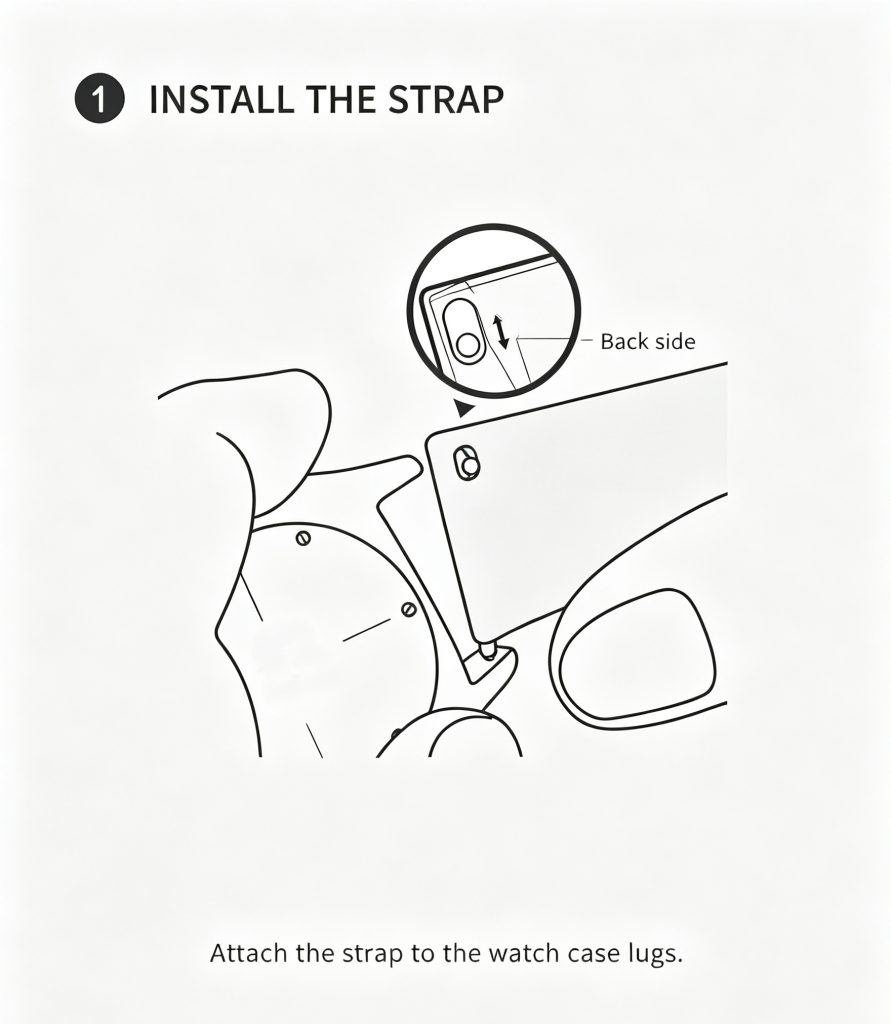
Install the CTS strap on your watch before making any cuts.
If the strap uses quick-release spring bars, installation may be straightforward. Make sure both sides are properly secured before testing the length.
Next, place the watch on your wrist and bring both strap ends around your wrist.
The goal is to determine where the clasp naturally sits when the strap is comfortably closed.
What should you look for?
Check three things:
- Is the strap comfortable?
- Is the clasp positioned close to the center of your wrist?
- Is there enough length to close the clasp without pulling the strap tightly?
At this stage, do not cut immediately.
Step 2: Determine Where to Cut

Step 3: Cut Along the Designated Groove

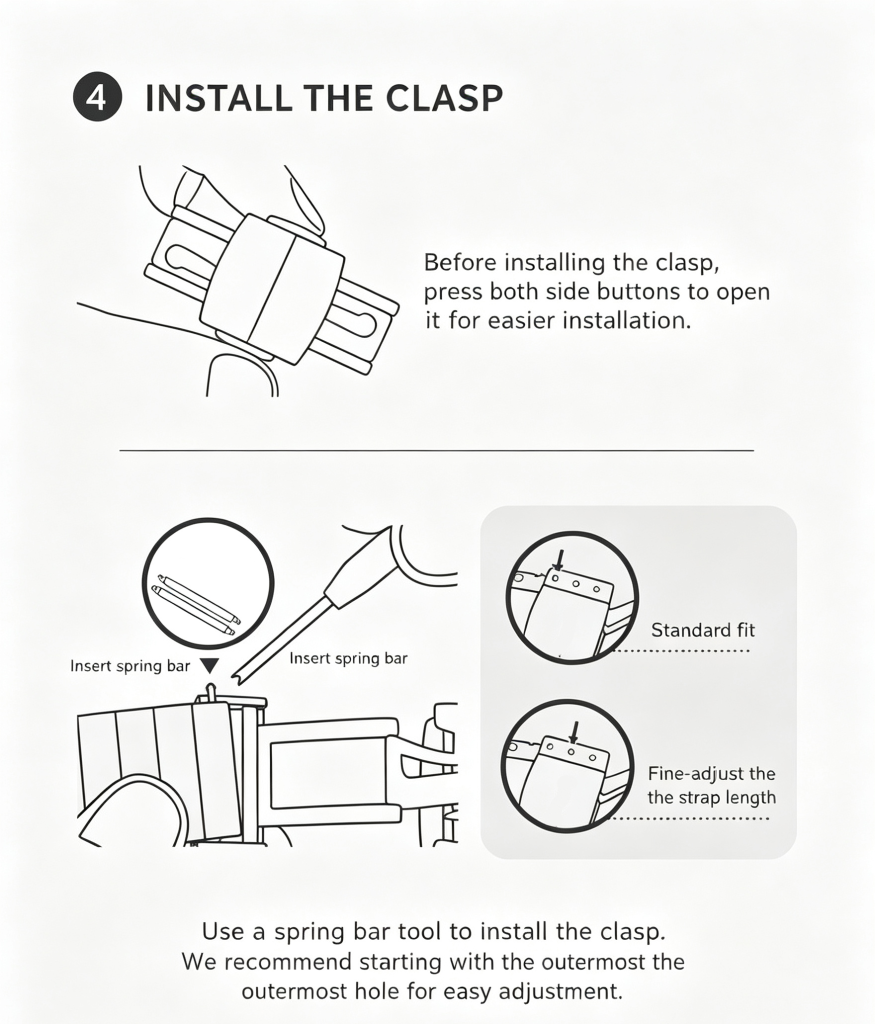
Step 4: Install the Clasp
Step 5: Check the Fit

Put the watch back on your wrist and close the clasp.
Do not judge the fit only by looking at the strap.
Check how the watch actually sits on your wrist.
Check the following:
- Is the strap too tight?
- Is the watch moving excessively?
- Is the clasp sitting comfortably?
- Is the clasp reasonably centered?
- Does the watch remain properly positioned when you move your wrist?
Step 6: Make Final Adjustments
If the strap is still too long, repeat the process.
- Identify which side needs additional adjustment.
- Remove only one segment.
- Reinstall the clasp.
- Try the watch again.
- Repeat until the fit is comfortable.
How Tight Should a Rubber Watch Strap Be?
A properly sized rubber watch strap should feel secure without creating excessive pressure on your wrist.
| Fit | What You May Notice | Result |
|---|---|---|
| Too tight | Strap pulls against the wrist | Uncomfortable |
| Too loose | Watch moves excessively | Poor stability |
| Comfortable | Watch stays secure without excessive pressure | Ideal |
| Clasp slightly open | Small gap may remain depending on preference | Can be acceptable |
The ideal fit depends partly on personal preference.
Some people prefer a snug fit, while others prefer slightly more freedom of movement.
The important point is that the strap should not create constant pulling or pressure.
Does One CTS Strap Fit Every Watch?

No.
Two watches can have exactly the same lug width yet still require different final cut‑to‑size strap lengths. While CTS straps offer length adjustability, this does not mean a single strap will fit every watch perfectly. Lug width is the most obvious parameter, but it is only one part of compatibility checking.
Why is lug‑to‑lug distance so critical?
Lug‑to‑lug distance determines how the strap travels around your wrist. Even with identical lug width, a watch with a longer lug‑to‑lug distance will place the strap and clasp in a completely different position on your wrist. This matters greatly for CTS straps, because their final length is achieved by physically removing segments. Once cut, material cannot be restored.
Lug width only determines whether the strap can be mounted on the watch. It does not guarantee an identical wearing experience after installation.
How to Choose Between Straight CTS and Curved CTS
 Rated 0 out of 5$68.00Select options This product has multiple variants. The options may be chosen on the product page
- Rated 0 out of 5$46.79 – $70.79Price range: $46.79 through $70.79Select options This product has multiple variants. The options may be chosen on the product page
- Rated 0 out of 5$78.00Select options This product has multiple variants. The options may be chosen on the product page
- Rated 0 out of 5$48.00 – $62.00Price range: $48.00 through $62.00Select options This product has multiple variants. The options may be chosen on the product page


Straight CTS Watch Strap
A Straight CTS strap is designed for watches with a conventional straight spring bar position.
It is a natural choice when there is sufficient clearance between the strap, spring bar, and watch case.
Curved CTS Watch Strap
A Curved CTS strap is designed to follow a more curved path around the watch case.
It can be particularly useful when the spring bar holes are positioned close to the case or when a straight strap may create clearance concerns.
A curved-end strap does not automatically eliminate every gap between the strap and case.
The actual fit still depends on the watch’s lug shape and the position of its spring bar holes.
For a more detailed explanation, see our guide to Curved Straps vs Flat End Straps: How to Choose?
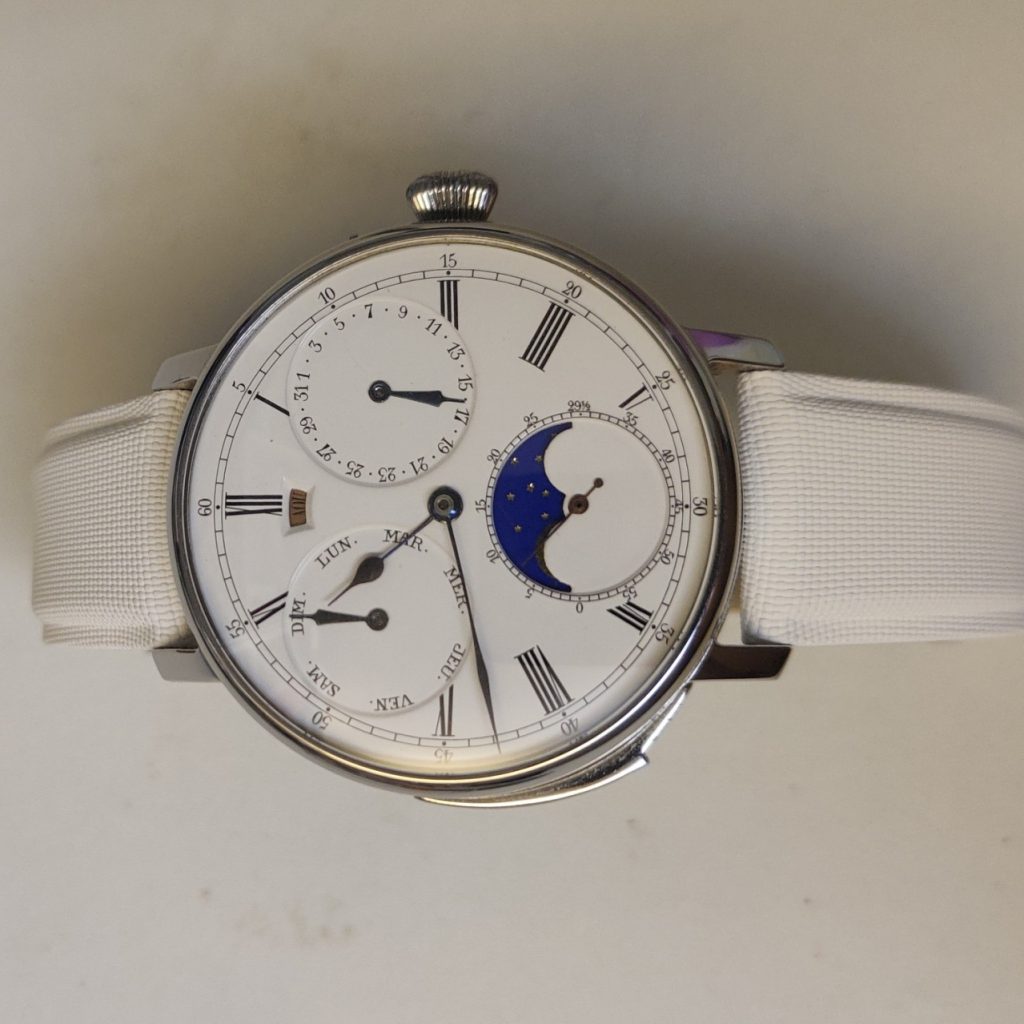
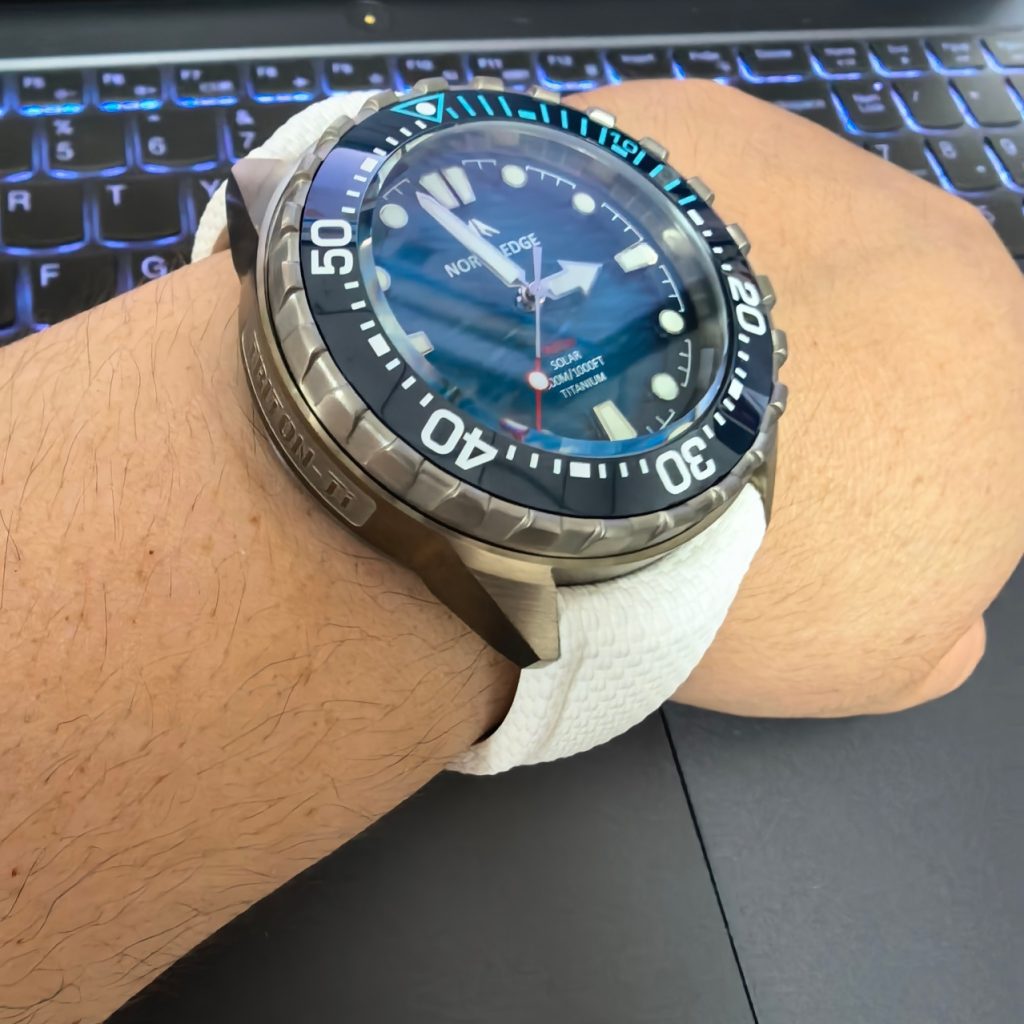
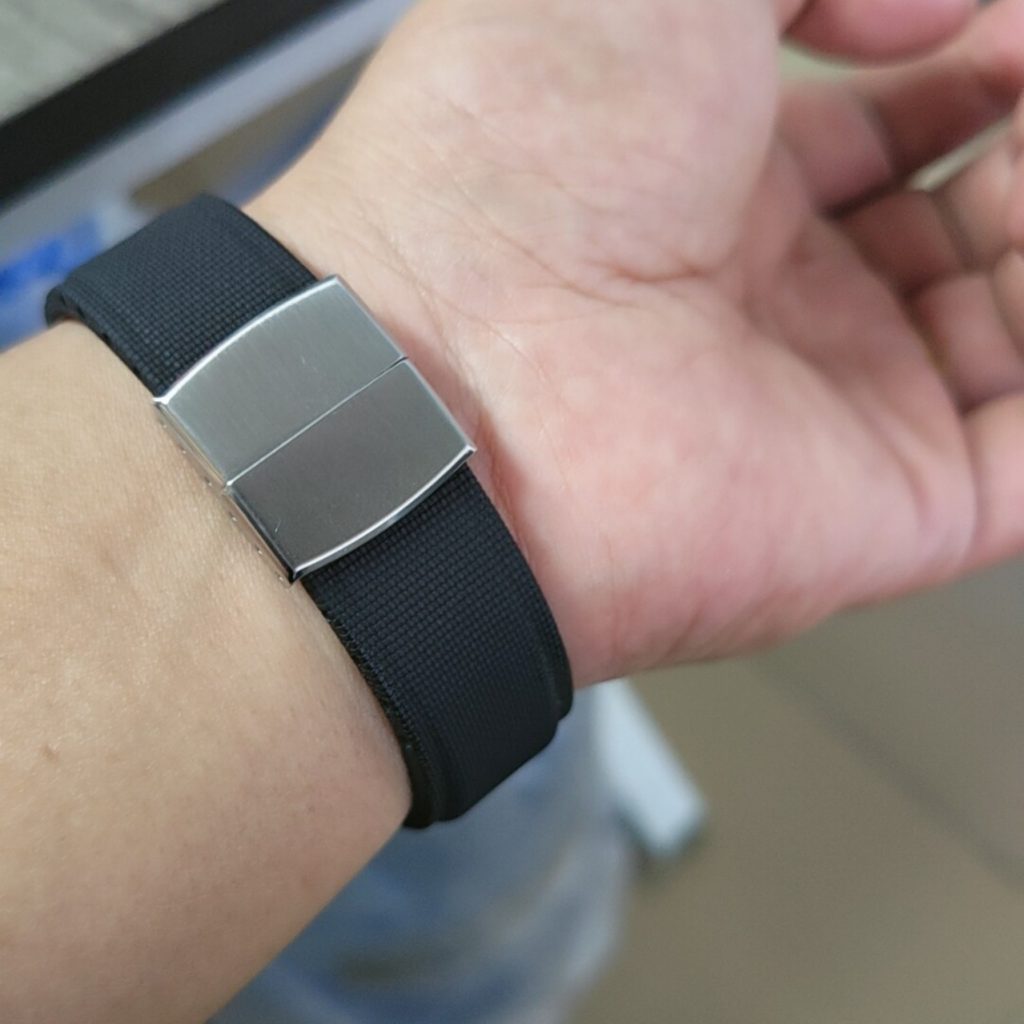
CTS Rubber Strap Fitting Examples on Different Watches






How to Clean and Care for an FKM Rubber Watch Strap
FKM rubber is commonly used for premium rubber watch straps because of its resistance to environmental conditions.
For routine cleaning, keep the process simple.
Daily Cleaning
- Rinse the strap with clean water.
- Wipe it with a soft cloth.
- Allow it to dry before wearing it again
FAQ
Q: Can I Cut a Rubber Watch Strap Myself?
A: Yes, follow this tutorial step‑by‑step. Only cut genuine CTS cut‑to‑size straps. Once segments are removed, they cannot be restored.
Q:What Is the Difference Between FKM Rubber and Silicone?
A:FKM rubber delivers better durability, UV‑ray and chemical resistance, and resists picking up dust and lint. Silicone is softer, more flexible and generally more budget‑friendly for casual use.For full details, please read our post: FKM VS Silicone
Q:What If I Cut the Strap Too Short?
A:Unfortunately, the removed rubber cannot simply be restored.
This is why you should always leave an extra segment during the first cut and shorten the strap gradually
Q: Are your clasps for CTS straps adjustable?
A: We offer multiple clasp options for CTS straps. You may leave notes during checkout or contact us to specify your preferred style.